opening
The Dedication to Lorenzo
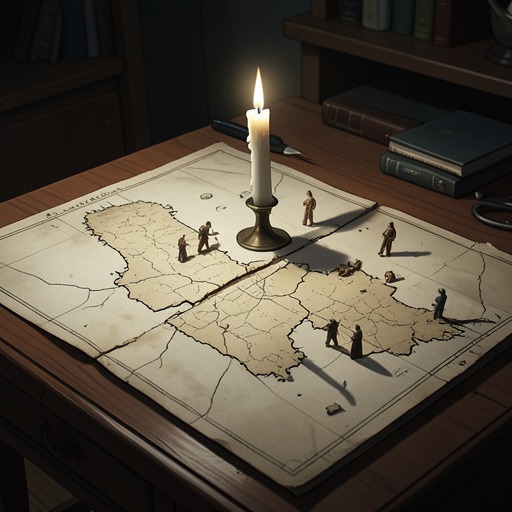
Niccolò Machiavelli presents his treatise to Lorenzo de’ Medici as a compact offering drawn from long experience of contemporary affairs and sustained study of antiquity. He argues that practical knowledge of rulers and peoples is best gained by viewing each from the other’s position.
The dedication establishes the work’s governing ambition: to strip political conduct of ornament and judge it by the realities of power, preservation, and loss. It also frames the author as an observer seeking usefulness rather than literary display.
early in the treatise
The Two Forms of Rule
The work begins by dividing all states into republics and principalities. Principalities may be hereditary or new; new ones may be wholly new or joined to existing dominions, and may be acquired through a ruler’s own arms or those of others, by merit or by fortune.
This classification supplies the analytical map for the chapters that follow. Each political form carries different dangers, and successful government depends on recognizing which kind of state has actually been acquired.
after the opening classification
The Durability of Hereditary Rule
Hereditary principalities are portrayed as comparatively easy to preserve because subjects are accustomed to the ruling family and the established customs of government. A prince of ordinary ability can usually survive so long as he avoids extraordinary provocations.
Even when an hereditary ruler is expelled, the old attachment to his line gives him a path back to power. The example of the Duke of [Ferrara](entity:location-recall-location-ferrara-334ce10982de) illustrates how time consolidates authority and makes innovation difficult.
after the discussion of hereditary principalities
The Instability of Mixed States
New territories attached to an older dominion are difficult to hold because inhabitants expect improvement from a change of masters and soon discover that conquest brings burdens, garrisons, and disappointed hopes. [The new prince](entity:concept-recall-concept-the-new-prince-cc428b704b21) also alienates those he has injured while failing to satisfy those who helped him seize the state.
The case of [France](entity:location-recall-location-france-f5cafc8a8ad4) in [Milan](entity:location-recall-location-milan-15a5d3d0bc36) demonstrates the pattern: popular enthusiasm for the invader turns into resistance once the new ruler’s conduct contradicts the promises attached to conquest.
1499 during the First Italian War
France Takes Milan
[Louis XII of France](entity:character-recall-character-louis-xii-of-france-2a866fef8d65) rapidly captures [Milan](entity:location-recall-location-milan-15a5d3d0bc36) after entering [Italy](entity:location-recall-location-italy-85c2492cd54b) with Venetian assistance. [Genoa](entity:location-recall-location-genoa-e7c43cca04b7), [Florence](entity:location-recall-location-florence-29107dc52cb3), [Mantua](entity:location-recall-location-mantua-029e50360a74), [Ferrara](entity:location-recall-location-ferrara-334ce10982de), and several smaller Italian powers submit or seek friendship, while the French king’s prestige rises sharply.
The conquest appears to offer [France](entity:location-recall-location-france-f5cafc8a8ad4) a dominant position in northern Italy. Yet the ease of acquisition conceals the harder task of transforming military success into durable political control.
soon after France captures Milan
Louis Strengthens the Church
Instead of consolidating weaker allies, Louis XII assists [Pope Alexander VI](entity:character-recall-character-pope-alexander-vi-2fb10de2613e) in conquering [Romagna](entity:location-recall-location-romagna-b2ad3d9e673a). This decision strips [France](entity:location-recall-location-france-f5cafc8a8ad4) of friendly buffers while increasing the temporal power of the [Roman Catholic Church](entity:organization-recall-organization-roman-catholic-c-7e6c11e91601).
Machiavelli treats the choice as a strategic blunder: the French king creates a future rival in order to obtain an immediate advantage, thereby weakening the very coalition that had made his conquest secure.
after the conquest of Milan
France Divides Naples
Louis XII seeks the [Kingdom of Naples](entity:location-recall-location-kingdom-of-naples-6107507f9d8c) and divides it with [Ferdinand II of Aragon](entity:character-recall-character-ferdinand-ii-of-ara-530f5ce6a143) rather than conquering it alone or leaving a dependent ruler in place. By bringing a powerful foreign rival into [Italy](entity:location-recall-location-italy-85c2492cd54b), he gives discontented Neapolitans a new power to invoke against [France](entity:location-recall-location-france-f5cafc8a8ad4).
The partition converts French predominance into a contest with Spain. Machiavelli presents it as an unnecessary compromise that creates the conditions for France’s expulsion.
after France’s Italian blunders
The Second Loss of Milan
[France](entity:location-recall-location-france-f5cafc8a8ad4) loses [Milan](entity:location-recall-location-milan-15a5d3d0bc36) after failing to protect weaker allies, strengthening the Church, introducing Spain into [Italy](entity:location-recall-location-italy-85c2492cd54b), refusing to reside in the conquered province, and neglecting colonies. The first recovery of Milan requires only the disturbance raised by [Ludovico Sforza](entity:character-recall-character-ludovico-sforza-f2d7276b9485); the later recovery demands a broader coalition and the destruction of French armies.
The repeated loss proves the treatise’s central warning about mixed principalities: conquest without foresight, local attachment, and independent foundations is temporary.
after the analysis of France’s failures
The Two Models of Empire
The text contrasts centralized monarchies, where officials depend entirely on the sovereign, with kingdoms governed through hereditary nobles who possess local authority and popular loyalty. The Ottoman state represents the first model, while [France](entity:location-recall-location-france-f5cafc8a8ad4) represents the second.
A centralized state is harder to invade because internal elites cannot easily invite an outsider, but once its ruler is decisively defeated it may be easier to hold. A noble-based kingdom is easier to enter but much harder to retain.
ancient history
Alexander Conquers Persia
[Alexander the Great](entity:character-recall-character-alexander-the-great-154e18d9ad80) conquers the Persian realm of [Darius III](entity:character-recall-character-darius-iii-4abbb2c18ca1), a centralized monarchy whose officials possess little independent authority. After Alexander’s death, the territory does not immediately revolt because the ruling family and centralized structure have been removed.
The example demonstrates that the form of government matters as much as the conqueror’s ability. Alexander’s successors struggle chiefly among themselves, not against entrenched local princes.
ancient history after Alexander’s conquest
Rome Consolidates Greece
[Rome](entity:location-recall-location-rome-3ec0a741c1f4) repeatedly confronts the fragmented political structure of [Greece](entity:location-recall-location-greece-6f5775f30806), where local dynasties and rival powers preserve memories of independence. The Roman conquest therefore requires more than defeating one sovereign; it requires weakening coalitions and extinguishing alternative centers of authority.
Rome’s preventive wars against Philip V and Antiochus III show the principle that distant dangers are easier to remove before they become immediate threats in [Italy](entity:location-recall-location-italy-85c2492cd54b).
after the comparison of Alexander and Rome
Rules for Acquired States
States sharing the conqueror’s language and customs are easier to integrate, especially if their former ruling line is removed and their laws and taxes remain unchanged. Provinces differing in language and institutions demand personal residence, colonies, or carefully balanced local alliances.
The ruler must protect weaker neighbors, restrain stronger ones, and prevent another powerful outsider from entering. Political disorders should be detected while still small, because delay turns manageable illness into incurable disease.
after the rules for mixed principalities
Methods for Free Cities
A city accustomed to freedom can be held by destruction, personal residence, or preservation of its laws under a dependent local government. Yet republics remember liberty more fiercely than subject monarchies remember their former rulers.
[Rome](entity:location-recall-location-rome-3ec0a741c1f4)’s destruction of [Capua](entity:location-recall-location-capua-d5f884d28a1f), [Carthage](entity:location-recall-location-carthage-dbc1b2ea2da4), and [Numantia](entity:location-recall-location-numantia-010147f223d4) is contrasted with the failures of [Sparta](entity:location-recall-location-sparta-6e1c0d10bce2) and Rome when they attempted to preserve Greek freedom under external control. A free city left intact remains a political memory waiting to become rebellion.
after the discussion of free cities
The Merit of Founding Rulers
New princes who rise through their own ability face severe resistance because innovation threatens those prospering under the old order while attracting only hesitant supporters from those who may benefit. Their success depends on force as well as persuasion.
[Moses](entity:character-recall-character-moses-41d61dad2701), [Cyrus the Great](entity:character-recall-character-cyrus-the-great-f828304e1e6e), [Romulus](entity:character-recall-character-romulus-1894353b81a7), and [Theseus](entity:character-recall-character-theseus-d07fe0f16827) are presented as founders who recognized favorable opportunities and transformed them through [Virtù](entity:concept-recall-concept-virt-e9870eecf4d8). Fortune supplied circumstances, but their capacity converted opportunity into institutions and durable authority.
during the analysis of new rulers by merit
The Armed Prophets
The treatise distinguishes armed prophets, who establish new orders through their own power, from unarmed prophets, whose reforms collapse when belief weakens. [Savonarola](entity:character-recall-character-savonarola-54d7bef787a7) becomes the negative example because he cannot compel continued adherence once the crowd begins to doubt him.
The principle is not that persuasion is useless, but that political innovation requires independent means of enforcement. Without arms, a reformer remains dependent on unstable conviction and cannot secure the institutions he creates.
ancient history after the founding examples
Hiero Rises in Syracuse
[Hiero II of Syracuse](entity:character-recall-character-hiero-ii-of-syracus-fff3c9705ce0) rises from private life after the Syracusans choose him as commander. His military merit earns him kingship, and he immediately replaces the old army and alliances with forces and relationships dependent on himself.
Because his foundations are his own, he faces difficulty in acquiring power but little difficulty in preserving it. His career exemplifies the strength of institutions built before crisis rather than improvised after it.
after the discussion of rulers by merit
Fortune-Born Princes
Princes raised by money, inheritance-like grants, or the favor of another power acquire states easily but struggle to hold them. They lack the experience to command and the independent forces needed to withstand the first reversal of fortune.
[Francesco Sforza](entity:character-recall-character-francesco-sforza-7dc0c463f4d2) is contrasted with [Cesare Borgia](entity:character-recall-character-cesare-borgia-ec0a6c097183): the former acquires [Milan](entity:location-recall-location-milan-15a5d3d0bc36) through sustained ability, while the latter receives his principality through his father’s power and must labor afterward to construct foundations of his own.
early in Cesare Borgia’s rise
Alexander’s Political Opening
[Pope Alexander VI](entity:character-recall-character-pope-alexander-vi-2fb10de2613e) seeks a state for his son [Cesare Borgia](entity:character-recall-character-cesare-borgia-ec0a6c097183) but finds the Church’s existing possessions insufficient and Italian powers unwilling to tolerate his expansion. The pope therefore exploits Venetian plans to bring [France](entity:location-recall-location-france-f5cafc8a8ad4) into [Italy](entity:location-recall-location-italy-85c2492cd54b) and helps dissolve the French king’s marriage in order to secure French cooperation.
When Louis XII enters Italy, Alexander obtains French military assistance for Cesare’s campaign in [Romagna](entity:location-recall-location-romagna-b2ad3d9e673a). The episode shows how a powerful patron can manufacture opportunity by rearranging the surrounding political order.
early sixteenth century
Cesare Conquers Romagna
[Cesare Borgia](entity:character-recall-character-cesare-borgia-ec0a6c097183) enters [Romagna](entity:location-recall-location-romagna-b2ad3d9e673a) with French troops and quickly takes Imola and [Forlì](entity:location-recall-location-forl-bdaf094334dd) after the province submits under the reputation of French arms. He also suppresses the Colonna faction and expands his territorial base.
The conquest gives Cesare a state of his own but leaves him dependent on unreliable allies. His next political task is therefore not simply expansion, but the replacement of borrowed power with forces and loyalties under his direct control.
after the conquest of Romagna
Cesare Breaks with Mercenaries
[Cesare Borgia](entity:character-recall-character-cesare-borgia-ec0a6c097183) recognizes that the Orsini and Vitelli forces may abandon him or turn against him, while [France](entity:location-recall-location-france-f5cafc8a8ad4) can restrain his ambitions whenever its interests change. He begins rewarding members of rival factions with offices, wealth, and commands so that their old loyalties gradually give way to dependence on him.
This policy prepares the destruction of the factions’ leaders and marks Cesare’s transition from a beneficiary of external power to an autonomous political actor.
after Cesare’s consolidation of Romagna
The Magione Conspiracy
The Orsini and their allies meet at [Magione](entity:location-recall-location-magione-871df9dbf007) after realizing that Cesare’s growing state and the Church’s expansion threaten their survival. Their conspiracy triggers the revolt of [Urbino](entity:location-recall-location-urbino-e1c3c4f6a3d3), disorder in [Romagna](entity:location-recall-location-romagna-b2ad3d9e673a), and a series of dangers that temporarily damage Cesare’s reputation.
Cesare survives with French assistance, but the revolt teaches him that foreign aid is an unstable foundation. He therefore turns toward deception and the systematic elimination of those who can challenge him.
after the Magione conspiracy
The Senigallia Trap
[Cesare Borgia](entity:character-recall-character-cesare-borgia-ec0a6c097183) restores his standing by presenting himself as reconciled with the Orsini and Vitelli leaders. Through gifts, assurances, and calculated dissimulation, he draws them to [Sinigaglia](entity:location-recall-location-sinigaglia-a76508d62754), where he captures and eliminates the principal commanders.
The seizure destroys the organized opposition around him and leaves their followers ready to transfer loyalty to the duke. It is the clearest practical demonstration of the [Lion](entity:creature-recall-creature-lion-9c602d24ae73) and the [Fox](entity:creature-recall-creature-fox-ef8d6f85e3fc) principle.
after the Senigallia trap
The Pacification of Romagna
[Romagna](entity:location-recall-location-romagna-b2ad3d9e673a) has been ruled by weak lords who plunder rather than govern, leaving robbery, faction, and disorder everywhere. Cesare appoints Ramiro d’Orco with extensive authority, and the severe administrator rapidly restores peace and obedience.
The episode illustrates the use of concentrated severity to end disorder. Cesare’s problem then becomes how to separate the restored order from the hatred naturally directed at the instrument that created it.
soon after the pacification of Romagna
Ramiro’s Public Execution
Once [Romagna](entity:location-recall-location-romagna-b2ad3d9e673a) is orderly, Cesare creates a civil tribunal and reduces Ramiro d’Orco’s extraordinary powers. He then has Ramiro beheaded and displays the body publicly in [Cesena](entity:location-recall-location-cesena-9537c1677dd1) with the executioner’s block and axe.
The spectacle satisfies popular anger and allows Cesare to claim that the worst cruelties came from an excessively harsh minister rather than from the duke himself. The act converts fear into a political reputation for justice while preserving the benefits of repression.
after the pacification of Romagna
Cesare Seeks Independence
With [Romagna](entity:location-recall-location-romagna-b2ad3d9e673a) and [Urbino](entity:location-recall-location-urbino-e1c3c4f6a3d3) substantially secured, Cesare must determine how to proceed without French support. [France](entity:location-recall-location-france-f5cafc8a8ad4) is now engaged in war with Spain over [Naples](entity:location-recall-location-naples-13ce8e2c4961), and Cesare begins exploring new alliances that might protect him from French pressure.
He also plans for the danger posed by a future pope who may reverse Alexander’s grants. His preparations include eliminating dynastic claimants, winning Roman nobles, controlling the [College of Cardinals](entity:organization-recall-organization-college-of-cardi-f73c81de3842), and establishing authority strong enough to survive his father’s death.
the year before Alexander VI’s death
Cesare’s Tuscan Ambition
[Cesare Borgia](entity:character-recall-character-cesare-borgia-ec0a6c097183) holds [Perugia](entity:location-recall-location-perugia-1cc190912c09) and [Piombino](entity:location-recall-location-piombino-639323d15a24) and assumes the protection of [Pisa](entity:location-recall-location-pisa-62234cf92f7b), intending to take Pisa and then force [Lucca](entity:location-recall-location-lucca-38860f44848b) and [Siena](entity:location-recall-location-siena-0176483022e8) into submission. [Florence](entity:location-recall-location-florence-29107dc52cb3) would consequently face a desperate strategic position.
The projected conquest of [Tuscany](entity:location-recall-location-tuscany-3d28192ebb28) would give Cesare enough power and reputation to stand independently of [France](entity:location-recall-location-france-f5cafc8a8ad4) and the Church. His designs reveal how close he came to converting a gift of fortune into a durable personal state.
1503
Alexander VI Dies
[Pope Alexander VI](entity:character-recall-character-pope-alexander-vi-2fb10de2613e) dies while Cesare is gravely ill and before the duke can complete his Tuscan plans. Cesare is left with [Romagna](entity:location-recall-location-romagna-b2ad3d9e673a) consolidated but the rest of his political structure unsettled, while two hostile armies threaten him.
Although he has prepared for many consequences of his father’s death, his own illness is the unforeseen weakness. The event exposes the dependence of even an exceptionally capable ruler on timing and Fortune.
immediately after Alexander VI’s death
Julius II Becomes Pope
[Cesare Borgia](entity:character-recall-character-cesare-borgia-ec0a6c097183) cannot secure the papal election he wants and fails to prevent the elevation of [Pope Julius II](entity:character-recall-character-pope-julius-ii-1bf5505c9ba3), a cardinal whose interests and resentments make him dangerous. Had Cesare been healthy, he might have blocked the election or imposed a more favorable candidate.
The new pope’s hostility helps destroy Cesare’s remaining political position. Machiavelli identifies this electoral mistake, compounded by illness and foreign armies, as the decisive cause of the duke’s downfall.
after the account of his downfall
Cesare as Political Model
Despite his failure, [Cesare Borgia](entity:character-recall-character-cesare-borgia-ec0a6c097183) is presented as the most instructive example for a ruler elevated by fortune and the arms of others. He removed enemies, cultivated friends, created his own forces, balanced severity with political display, and sought alliances that made him useful but dangerous to offend.
His defeat is attributed not to defective judgment but to the extraordinary convergence of his father’s early death, his own illness, and hostile armies. The example therefore joins practical excellence to the warning that [Virtù](entity:concept-recall-concept-virt-e9870eecf4d8) cannot command every circumstance.
ancient history
Agathocles Seizes Syracuse
[Agathocles of Syracuse](entity:character-recall-character-agathocles-of-syrac-1e232ad5bc33) rises from a humble background through military service and becomes praetor. He then summons the senate and leading citizens under the pretense of public consultation, orders his soldiers to massacre them, and assumes the sovereignty without opposition.
His seizure of [Syracuse](entity:location-recall-location-syracuse-bf81ac0ea6df) demonstrates that a private man may reach princely power through crime and violence rather than merit or fortune. Yet political effectiveness does not transform cruelty and treachery into glory.
after Agathocles seizes Syracuse
Agathocles Defeats Carthage
Agathocles survives two defeats by [Carthage](entity:location-recall-location-carthage-dbc1b2ea2da4) and a siege of [Syracuse](entity:location-recall-location-syracuse-bf81ac0ea6df). Leaving part of his army to defend the city, he invades [Africa](entity:location-recall-location-africa-7f6149c69b08) with the remainder, raises the siege, and forces the Carthaginians to abandon [Sicily](entity:location-recall-location-sicily-8d99f798a76e) and confine themselves to Africa.
His military ability and constancy are extraordinary, but the treatise refuses to call his crimes virtues. He may possess force and resilience without possessing the honor that belongs to great men.
early sixteenth century
Oliverotto Returns to Fermo
[Oliverotto da Fermo](entity:character-recall-character-oliverotto-da-fermo-56500d26963f), an orphan raised by his uncle Giovanni Fogliani, rises through the military service of [Paolo Vitelli](entity:character-recall-character-paolo-vitelli-00bb3b332e02) and [Vitellozzo Vitelli](entity:character-recall-character-vitellozzo-vitelli-16717c10ea8c). Dissatisfied with serving others, he plots to seize his native city with the backing of the [Vitelli family](entity:organization-recall-organization-vitelli-family-6c0cd1a67862) and disaffected citizens.
He writes to his uncle requesting an honored return with armed followers. The appeal to family affection and civic pride becomes the mechanism by which he gains entry into the city he intends to overthrow.
soon after his return to Fermo
Oliverotto Takes Fermo
Oliverotto hosts a banquet for Giovanni Fogliani and the leading citizens of [Fermo](entity:location-recall-location-fermo-733aefe214c1). After diverting conversation to the power of the pope and [Cesare Borgia](entity:character-recall-character-cesare-borgia-ec0a6c097183), he draws the guests into a private chamber, where concealed soldiers kill them.
He then rides through the city, besieges the chief magistrate, and compels Fermo to accept him as ruler. By killing likely opponents and reorganizing civil and military institutions, he makes the city formidable for a time.
one year after the seizure of Fermo
Oliverotto Is Strangled
Oliverotto’s rule ends when [Cesare Borgia](entity:character-recall-character-cesare-borgia-ec0a6c097183) entraps him alongside the Orsini and Vitelli leaders at [Sinigaglia](entity:location-recall-location-sinigaglia-a76508d62754). He is strangled one year after murdering his uncle and the leading citizens of [Fermo](entity:location-recall-location-fermo-733aefe214c1).
His fate confirms that criminal founders can be destroyed by the same logic of treachery through which they rose. The episode leads to the distinction between cruelty used once to secure a state and cruelty that grows continually.
after the examples of Agathocles and Oliverotto
The Rule of Cruelty
Cruelty is judged well employed when inflicted decisively at the beginning of a seizure, then discontinued and followed by benefits. It is ill employed when renewed daily, because continued injury prevents subjects from recovering confidence and creates permanent hostility.
The governing maxim is that injuries should be inflicted all at once while benefits should be bestowed gradually. This political calculus seeks not moral approval but the cessation of disorder and the stabilization of rule.
after the discussion of criminal rulers
The Civil Principality
A leading citizen may become prince through the favor of the nobles or the people. The nobles seek a ruler who will help them dominate; the people seek one who will shield them from domination.
A prince raised by popular support is generally safer because the people ask only not to be oppressed, while nobles demand privileges that injure others. Yet such a ruler must preserve the people’s goodwill, especially when moving from constitutional authority toward more personal command.
ancient history
Nabis Defends Sparta
[Nabis of Sparta](entity:character-recall-character-nabis-of-sparta-821dd54fb8b4) faces the combined forces of [Greece](entity:location-recall-location-greece-6f5775f30806) and a victorious Roman army. He succeeds in defending his city and crown, requiring precautions against only a small number of subjects because the people are not hostile.
His survival illustrates the strategic value of popular support. A prince who commands the confidence of the people possesses a reserve of strength that cannot be replaced by walls, offices, or elite alliances.
during the analysis of civil principalities
The Danger of Magistrates
Civil princes are most vulnerable when they try to pass from popular rule into absolute authority. If they continue to govern through magistrates, they depend on officials who may refuse obedience or strip them of power when danger arrives.
Peaceful professions of loyalty are unreliable because citizens promise much when the state does not need them. A wise prince must arrange matters so that subjects always feel the need for the state and for his leadership, ensuring fidelity before the crisis begins.
after the civil principality
The Measure of State Strength
A principality is strong when its ruler can field an army capable of meeting an assailant in the open; it is weak when it must retreat behind walls and await outside help. A prince lacking field strength should fortify his city and avoid provoking his subjects.
German towns are cited as examples of fortified communities able to endure prolonged sieges through stores, artillery, moats, public provisions, and organized labor. Yet fortifications work best when the ruler is not hated, because hostility can invite foreigners into the city.
after the discussion of state strength
The Security of Ecclesiastical States
Ecclesiastical principalities are acquired through merit or fortune but maintained without either because religious institutions support the authority of their rulers. Their territories need not be defended in ordinary ways, and their subjects do not readily rebel.
The exceptional character of the papal state places it outside the usual political rules. Nevertheless, its temporal growth can be explained by the gradual accumulation of money, arms, territory, and control over the Roman factions.
before and during the Italian Wars
The Church Gains Power
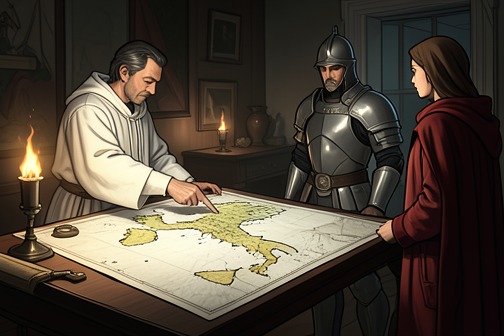
Before [Charles VIII of France](entity:character-recall-character-charles-viii-of-fra-4483f86538b0) enters [Italy](entity:location-recall-location-italy-85c2492cd54b), the pope, [Venice](entity:location-recall-location-venice-0377938b8d6a), [Naples](entity:location-recall-location-naples-13ce8e2c4961), [Milan](entity:location-recall-location-milan-15a5d3d0bc36), and [Florence](entity:location-recall-location-florence-29107dc52cb3) balance one another by preventing foreign invasion and territorial expansion. Roman baronial factions keep the papacy weak, but [Pope Alexander VI](entity:character-recall-character-pope-alexander-vi-2fb10de2613e) uses money, French intervention, and [Cesare Borgia](entity:character-recall-character-cesare-borgia-ec0a6c097183)’s arms to enlarge the Church’s position.
[Pope Julius II](entity:character-recall-character-pope-julius-ii-1bf5505c9ba3) inherits [Romagna](entity:location-recall-location-romagna-b2ad3d9e673a), weakened Roman nobles, and new financial resources. He conquers [Bologna](entity:location-recall-location-bologna-e9b2b10db055), defeats Venice, and expels [France](entity:location-recall-location-france-f5cafc8a8ad4), turning the Church into a central Italian power.
after the discussion of ecclesiastical states
The Failure of Mercenaries
The treatise identifies good laws and good arms as the foundations of every state, then rejects mercenary armies as disunited, ambitious, treacherous, and unreliable. Their commanders either become dangerous when capable or ruin their employers when incompetent.
[Italy](entity:location-recall-location-italy-85c2492cd54b)’s disasters are attributed to prolonged dependence on hired soldiers. Mercenaries have no sufficient motive to die for the state, and their apparent strength in internal wars collapses when faced with determined foreign enemies.
during the Venetian expansion on land
Carmagnola’s Betrayal
The Venetians employ Carmagnola, whose leadership helps them defeat the Duke of [Milan](entity:location-recall-location-milan-15a5d3d0bc36). When he later conducts the war cautiously, they suspect that he is unwilling or unable to win further victories but cannot safely dismiss him.
To protect themselves from the commander they have empowered, the Venetians execute him. The episode shows that reliance on mercenary captains creates danger whether the captain succeeds or fails.
at the Battle of Vaila
Venice Loses Its Mainland
After abandoning its traditional maritime strength for land warfare conducted through mercenary commanders, [Venice](entity:location-recall-location-venice-0377938b8d6a) suffers a devastating defeat at Vaila. In a single day it loses what had taken centuries to acquire.
The asymmetry between slow mercenary gains and sudden mercenary losses becomes a central warning. A state that entrusts its survival to hired forces has surrendered the pace and conditions of its own security.
after the critique of mercenaries
Auxiliaries Become a Trap
[Auxiliary troops](entity:concept-recall-concept-auxiliary-troops-8f410e6cf658) are forces summoned from another ruler and therefore remain united under their own commander. If they are defeated, the inviting prince is ruined; if they win, he becomes dependent on the army that saved him.
[Pope Julius II](entity:character-recall-character-pope-julius-ii-1bf5505c9ba3)’s appeal to [Ferdinand II of Aragon](entity:character-recall-character-ferdinand-ii-of-ara-530f5ce6a143) for the attack on [Ferrara](entity:location-recall-location-ferrara-334ce10982de) illustrates the danger. The Florentine use of French troops against [Pisa](entity:location-recall-location-pisa-62234cf92f7b) and the Turkish occupation of [Greece](entity:location-recall-location-greece-6f5775f30806) after intervention for [Constantinople](entity:location-recall-location-constantinople-a234f40d5eca) reinforce the same conclusion.
after using French and Italian forces
Cesare Creates His Own Army
[Cesare Borgia](entity:character-recall-character-cesare-borgia-ec0a6c097183) first relies on French auxiliaries, then on the mercenary forces of the Orsini and Vitelli. Finding both types unreliable, he removes them and raises troops of his own.
His reputation rises with each step away from borrowed power. The movement from auxiliaries to mercenaries and finally to national forces demonstrates that a ruler’s standing grows when everyone recognizes him as master of his own arms.
ancient history
Hiero Destroys His Mercenaries
[Hiero II of Syracuse](entity:character-recall-character-hiero-ii-of-syracus-fff3c9705ce0) discovers that the hired soldiers supplied by Italian-style military contractors cannot be trusted. Because he cannot safely retain or disband them, he has them killed and thereafter conducts war with native troops.
The drastic measure reinforces the treatise’s claim that a ruler must possess forces bound to his own state. Dependence on soldiers whose interest ends with their pay makes political authority fragile even when they appear militarily effective.
biblical antiquity
David Rejects Saul’s Armor
When David offers to fight Goliath, Saul equips him with armor. David rejects the unfamiliar equipment and chooses his sling and sword instead.
The story becomes an image of political and military self-reliance: another ruler’s instruments may be too large, too small, or otherwise unsuited to the person who must use them. A prince’s power must fit his own capacities and foundations.
fifteenth century
Charles VII Builds a National Army
Charles VII of [France](entity:location-recall-location-france-f5cafc8a8ad4), having expelled the English, establishes ordinances regulating men-at-arms and infantry throughout the kingdom. His reforms strengthen the state by making military power a national institution rather than a service purchased from outsiders.
Later French rulers weaken this foundation by abolishing much of the national infantry and hiring Swiss soldiers. The example shows how a seemingly convenient military reform can carry hidden long-term poison.
late Roman history
The Roman Army Declines
The decline of the [Roman Empire](entity:organization-recall-organization-roman-empire-ecb51fee35ac) is traced partly to the employment of Gothic mercenaries. As Roman military virtue passes into the hands of foreign soldiers, the empire loses the strength that once made it secure.
The historical lesson is stated categorically: without national arms, no principality is safe. Reputation unsupported by citizens, subjects, or dependents is temporary and ultimately governed by Fortune.
after the discussion of military forces
War as a Prince’s Art
A prince must devote himself above all to war, because military competence preserves hereditary rulers and raises capable private men to power. Neglect makes rulers contemptible, dependent, and unable either to command soldiers or to trust them.
Military preparation must continue in peace through bodily practice, geographical observation, and study of historical commanders. The prince who understands terrain, logistics, marches, battle formations, and sieges is prepared before danger arrives.
ancient history
Philopoemon Studies Battle
Philopoemon of [Achaea](entity:location-recall-location-achaea-22796d18648e) spends peacetime imagining military contingencies while traveling through the countryside. He asks his companions how an army would advance, retreat, pursue, or exploit the terrain, and tests their answers against his own reasoning.
When real command comes, complications do not surprise him. His example links military intelligence to continuous mental rehearsal rather than improvisation under pressure.
after the military duties of princes
Princes Imitate Great Models
A wise prince studies history and examines the causes of victories and defeats. [Alexander the Great](entity:character-recall-character-alexander-the-great-154e18d9ad80) seeks to resemble Achilles, Caesar Alexander the Great, and [Scipio Africanus](entity:character-recall-character-scipio-africanus-b46709acafce) [Cyrus the Great](entity:character-recall-character-cyrus-the-great-f828304e1e6e).
Imitation is not mechanical copying but an effort to recover the qualities that made earlier leaders effective. The ruler must use peace to build the strength, judgment, and readiness needed when Fortune turns against him.
after the military chapters
The Reality of Political Conduct
Machiavelli turns from arms to the conduct of princes and rejects imaginary standards of perfect goodness. A ruler who always acts virtuously among people who do not will be destroyed, so he must learn when to use goodness and when necessity requires its opposite.
The argument does not deny the value of virtue; it subordinates moral appearance to political survival. The prince must distinguish between vices that destroy authority and those that, under certain conditions, preserve it.
after the discussion of princely qualities
Miserliness Preserves Power
Liberality can ruin a prince because conspicuous spending exhausts his resources and forces him to burden subjects with taxes and confiscations. The ruler then becomes hated by many while benefiting only a few.
Miserliness, by contrast, preserves revenue, defense, and freedom of action. A prince may be called stingy yet become effectively liberal toward the countless people from whom he does not seize property and toward enterprises he can undertake without impoverishing the state.
after the discussion of liberality
Cruelty Can Restore Order
A prince should prefer mercy to cruelty, but excessive leniency can allow faction, robbery, and bloodshed to spread through an entire community. [Cesare Borgia](entity:character-recall-character-cesare-borgia-ec0a6c097183)’s reputation for cruelty is therefore judged less harmful than [Florence](entity:location-recall-location-florence-29107dc52cb3)’s hesitation, which permits Pistoia to be torn apart by factions.
A few decisive punishments may injure individuals while sparing the state from prolonged disorder. The principle is political rather than sentimental: severity can be more merciful in its consequences when it ends violence quickly.
during the analysis of cruelty and clemency
Fear Without Hatred
The famous question of whether a prince should be loved or feared is answered pragmatically. Since love depends on subjects while fear depends on the ruler, fear is safer, provided it does not become hatred.
The prince must avoid touching property and women, since people more readily forget a father’s death than the loss of patrimony. Punishment must have manifest cause, while confiscatory appetite creates an endless supply of enemies.
ancient history
Hannibal Commands Fear
Hannibal maintains discipline among a large army composed of many nations fighting far from home. No mutiny or internal dissension destroys the force, despite changing fortunes.
Machiavelli attributes this cohesion partly to Hannibal’s severe reputation. Cruelty, joined to his other qualities, makes him venerable and terrifying; without that fear, the army might not have remained obedient.
ancient history after Hannibal’s example
Scipio’s Leniency Fails
[Scipio Africanus](entity:character-recall-character-scipio-africanus-b46709acafce) allows his soldiers a freedom incompatible with strict military discipline, and his armies revolt in Spain. He also fails to punish a lieutenant who has abused the Locrians, reflecting his natural easiness of temperament.
The same mildness that can appear glorious under the supervision of the [Roman Senate](entity:organization-recall-organization-roman-senate-89663bf046a2) becomes a weakness when a commander must directly control a military institution. Clemency without authority can corrupt obedience.
193 CE
Severus Seizes Rome
After [Pertinax](entity:character-recall-character-pertinax-ad34250b77eb) is murdered, [Septimius Severus](entity:character-recall-character-septimius-severus-dd28279ca211) persuades his Illyrian army to march to [Rome](entity:location-recall-location-rome-3ec0a741c1f4) under the pretext of avenging him. He reaches [Italy](entity:location-recall-location-italy-85c2492cd54b) before his design is understood, and the frightened [Roman Senate](entity:organization-recall-organization-roman-senate-89663bf046a2) recognizes him as emperor while [Didius Julianus](entity:character-recall-character-didius-julianus-536cdf92858c) is killed.
Severus combines a public justification with a concealed ambition. His success shows how a new ruler uses both military force and political appearance to take power before opponents can coordinate.
soon after Severus enters Rome
Severus Defeats Niger
Two rivals remain: Niger in the East and Albinus in the West. Severus attacks Niger openly while deceiving Albinus with promises of shared imperial authority and the title of Caesar.
After defeating and killing Niger, Severus returns to [Rome](entity:location-recall-location-rome-3ec0a741c1f4), denounces Albinus as a traitor, and marches against him in [Gaul](entity:location-recall-location-gaul-054f00c800a3). By combining the lion’s force against one rival with the fox’s deception against another, he becomes sole master of the empire.
during the imperial case studies
The Roman Emperors’ Dilemma
Roman emperors must satisfy both the people, who prefer peace and moderation, and the soldiers, who favor a warlike ruler willing to reward their greed. A ruler unable to control both groups is quickly exposed to destruction.
[Marcus Aurelius](entity:character-recall-character-marcus-aurelius-90dbd5bc37be) succeeds because inheritance, virtue, and authority allow him to restrain both factions. [Pertinax](entity:character-recall-character-pertinax-ad34250b77eb) and [Alexander Severus](entity:character-recall-character-alexander-severus-dd74e74e427e) fail because their moderation appears intolerable or contemptible to the forces on which their power depends.
193 CE
Pertinax Is Assassinated
[Pertinax](entity:character-recall-character-pertinax-ad34250b77eb) attempts to restore the stricter discipline abandoned under [Commodus](entity:character-recall-character-commodus-50f897ef240f), angering soldiers accustomed to license. Though temperate and just, he is also vulnerable because his age and severity make him seem contemptible to the military.
The [Praetorian Guard](entity:organization-recall-organization-praetorian-guard-7ae4000f77c2) murders him almost at the beginning of his reign. His fate illustrates that virtuous conduct cannot preserve a ruler who fails to understand the corrupt constituency on which his authority rests.
third century CE
Alexander Severus Falls
[Alexander Severus](entity:character-recall-character-alexander-severus-dd74e74e427e) rules justly and is said to have executed no one without trial during fourteen years. Yet he is considered effeminate and dominated by his mother, which makes him contemptible to the army.
The army conspires against him and kills him. His example confirms that justice alone cannot protect a ruler who lacks the appearance of strength and the capacity to command military loyalty.
193–211 CE
Severus Rules Through Force
[Septimius Severus](entity:character-recall-character-septimius-severus-dd28279ca211) is cruel and rapacious toward the people but maintains the soldiers’ loyalty through his warlike character and commanding reputation. His strength makes him admirable to the army and awe-inspiring to the population.
Because he combines severity with strategic intelligence, he survives where other emperors fail. His reign is presented as a model of adapting conduct to the realities of a corrupt and militarized political environment.
third century CE
Caracalla’s Murder
[Caracalla](entity:character-recall-character-caracalla-cca8e9e53b02) wins admiration from the army through endurance and a warlike lifestyle, but his extraordinary cruelty and mass killings make him hated throughout the empire. He threatens a centurion whose brother he has shamefully executed while foolishly retaining the man in his guard.
The centurion eventually kills Caracalla in the midst of the army. The episode shows that a prince cannot fully prevent a determined assassin, but can reduce the danger by avoiding needless injuries to those closest to him.
180–192 CE
Commodus Is Murdered
[Commodus](entity:character-recall-character-commodus-50f897ef240f) inherits the empire and could have preserved it by following [Marcus Aurelius](entity:character-recall-character-marcus-aurelius-90dbd5bc37be). Instead, he exploits the people, indulges the soldiers, descends into gladiatorial display, and abandons the dignity of imperial office.
He becomes hated by the people and despised by the army, which had tolerated his cruelty but not his contemptible behavior. A conspiracy forms, and he is murdered.
235–238 CE
Maximinus Is Overthrown
[Maximinus Thrax](entity:character-recall-character-maximinus-thrax-938a0da60618) rises from a humble background through military power and becomes emperor after [Alexander Severus](entity:character-recall-character-alexander-severus-dd74e74e427e) dies. His obscure origins make him contemptible, while the atrocities committed by his officials make him hated.
[Africa](entity:location-recall-location-africa-7f6149c69b08), the [Roman Senate](entity:organization-recall-organization-roman-senate-89663bf046a2), [Rome](entity:location-recall-location-rome-3ec0a741c1f4), and [Italy](entity:location-recall-location-italy-85c2492cd54b) unite against him. During the difficult siege of [Aquileia](entity:location-recall-location-aquileia-db8e06a11619), his own army loses fear of him and kills him, proving that cruelty without political stature cannot command lasting obedience.
after the imperial case studies
The Danger of Contempt
The imperial examples are gathered under one conclusion: hatred or contempt destroys rulers. A prince must appear decisive, courageous, wise, and strong, since fickleness, effeminacy, cowardice, and irresolution invite both conspiracy and foreign attack.
A ruler who avoids hatred and contempt can survive other reproaches. The strongest defense remains a combination of good arms abroad and popular goodwill at home.
after the imperial examples
Fortresses and Factions
Princes may disarm subjects, divide cities, cultivate enemies, win over former opponents, or build fortresses. These measures cannot be judged apart from circumstances, but deliberately fostered faction is dangerous because divided cities may surrender when an enemy arrives.
The Venetian encouragement of Guelf and Ghibelline divisions fails after Vaila, when one faction finds courage and the whole mainland territory is lost. A strong government should not need internal division as a substitute for authority.
during the discussion of defensive policy
The Best Fortress
Fortresses can protect a prince against his subjects or foreign enemies, but they may also become threats if the population is hostile. The citadel of [Milan](entity:location-recall-location-milan-15a5d3d0bc36) is said to have endangered the Sforza rulers more than other disorders of the state.
The safest fortress is not being hated by one’s subjects. If the people hate the prince, a fortress cannot prevent foreigners from entering as their allies.
late fifteenth and early sixteenth centuries
Ferdinand Builds Reputation
[Ferdinand II of Aragon](entity:character-recall-character-ferdinand-ii-of-ara-530f5ce6a143) begins his reign by waging the long war for [Granada](entity:location-recall-location-granada-01b059371b6e), keeping Castilian nobles occupied while he builds military discipline, authority, and reputation. He finances the campaign through the Church and his subjects without allowing the conflict to become politically idle.
He then uses religion to justify the expulsion of the Moors, intervention in [Africa](entity:location-recall-location-africa-7f6149c69b08), invasion of [Italy](entity:location-recall-location-italy-85c2492cd54b), and attack on [France](entity:location-recall-location-france-f5cafc8a8ad4). A sequence of large enterprises keeps his subjects absorbed in admiration and prevents opponents from finding time to organize.
after the example of Ferdinand’s enterprises
The Principle of Choosing Sides
A prince gains esteem by openly declaring himself a firm friend or enemy rather than remaining neutral between powerful neighbors. [Neutrality](entity:state-recall-state-neutrality-d61248f25037) satisfies neither victor nor vanquished and leaves the neutral state exposed to contempt or confiscation.
Choosing a side creates obligations: a victorious ally owes consideration, while a defeated ally may remember shared danger and assist later. The prince must accept that every policy contains risk and choose the lesser disadvantage.
after the discussion of alliances
The Patron of Merit
A prince should reward excellence in every art and make commerce, agriculture, and craftsmanship secure. Subjects must not fear that their property will be seized or that taxes will destroy the benefits of enterprise.
Public festivals, guild meetings, and visible courtesy can bind a ruler to the city, provided he preserves the dignity of his station. [Political reputation](entity:concept-recall-concept-political-reputation-b2773fb5226e) is built not only through war but through the conditions that let ordinary life flourish.
after the discussion of princely reputation
The Choice of Ministers
The quality of a prince’s ministers reveals his own intelligence. A capable and faithful minister proves that the ruler can recognize merit; a selfish minister exposes the ruler’s failure of judgment.
The minister who thinks more of himself than of the prince cannot be trusted. The prince must honor, enrich, and bind good ministers to him while ensuring that their responsibilities make them dependent on the stability of his rule.
after the discussion of ministers
The Discipline of Counsel
A prudent prince chooses discreet advisers and grants them permission to speak frankly only when he asks. He should seek counsel widely, listen patiently, and then decide for himself rather than allowing every opinion to redirect him.
The ruler who refuses all advice becomes secretive and easily thwarted; the ruler who follows every adviser becomes vacillating and contemptible. Good counsel originates in the prince’s own judgment, not the other way around.
after the discussion of flatterers
Princes Lose Italy
The Italian princes who lose their states fail first in arms and then in political foundations. Some alienate the people; others fail to secure the nobles; none prepare during peace for the storm that eventually arrives.
When adversity comes, they think only of escape and hope that subjects will recall them after experiencing foreign oppression. Such hope is an ignoble last resort because it depends on Fortune and on another power rather than on the prince’s own worth.
after the analysis of Italian failures
Fortune as a Torrent
Many believe human affairs are governed entirely by Fortune and God, but Machiavelli assigns Fortune roughly half the field while leaving the rest to human choice. Fortune resembles a destructive river: people cannot stop a flood once it rises, but can build banks and channels during fair weather.
States that lack organization become most vulnerable to sudden change. [Italy](entity:location-recall-location-italy-85c2492cd54b) is presented as an unembanked country whose weakness allows foreign inundations to produce violent political transformations.
after the torrent metaphor
Adapting to Fortune
Different temperaments can succeed when their methods fit the times. Cautious men prosper when circumstances reward patience; impetuous men prosper when events demand speed. The same method that once succeeded can become destructive when conditions change.
Men usually cannot alter their habitual conduct because past success persuades them to continue. Political wisdom therefore requires adaptation, though natural character and ingrained practice make such change rare.
during Pope Julius II’s reign
Julius Acts Impetuously
[Pope Julius II](entity:character-recall-character-pope-julius-ii-1bf5505c9ba3) marches personally against [Bologna](entity:location-recall-location-bologna-e9b2b10db055) before negotiations with [France](entity:location-recall-location-france-f5cafc8a8ad4), Spain, and [Venice](entity:location-recall-location-venice-0377938b8d6a) are settled. His speed catches every power off balance: Spain and Venice hesitate, while France follows rather than openly offend him.
The campaign succeeds because his impetuous character matches the moment. Had he waited for a complete diplomatic arrangement, opponents would have found excuses and alarms sufficient to stop him.
near the end of the political analysis
Fortune Favors Audacity
Machiavelli concludes that, though success depends on the fit between conduct and circumstances, impetuosity is generally preferable to excessive caution. Fortune is imagined as a woman more readily mastered by bold and forceful treatment than by timid approaches.
The metaphor expresses the treatise’s final preference for energetic action over passive reliance on chance. Youthful audacity can seize openings before they disappear, while hesitation leaves the field to others.
1516, near the ending
Italy Awaits a Liberator
The treatise turns from analysis to exhortation, arguing that [Italy](entity:location-recall-location-italy-85c2492cd54b)’s enslavement, division, and devastation have created an unprecedented opportunity for a new prince. Like the oppression of the Hebrews, Persians, and Athenians before the rise of their founders, Italy’s misery calls for a leader capable of transforming crisis into glory.
The appeal is directed to the Medici house, which Machiavelli claims possesses the position, resources, and divine favor needed to undertake national liberation. Political necessity and patriotic purpose are fused into a final summons.
the final chapter
A Sacred Italian War
[Italy](entity:location-recall-location-italy-85c2492cd54b)’s need is presented as both just and urgent: war is just when necessary, and arms are sacred when they offer the only hope of rescue. The people are described as ready to follow any standard raised against barbarian domination.
Machiavelli insists that divine signs may open the way, but human action must complete the work. The Medici must provide what Fortune and providence cannot supply by themselves: courage, institutions, and a disciplined national army.
immediately before the conclusion
The National Army Proposal
The proposed liberator must abandon [Italy](entity:location-recall-location-italy-85c2492cd54b)’s defective military system and raise troops from Italian subjects. National soldiers will be braver, more faithful, and more responsive to a prince who honors and commands them directly.
Machiavelli argues that Spanish infantry cannot resist cavalry and Swiss infantry can be broken by resolute foot soldiers trained to close at short range. Italy need not invent new manpower; it must reform discipline and command.
ending
The Call to Liberate Italy
The work closes by imagining the welcome awaiting an Italian leader who raises the standard of liberation. Cities would open their gates, populations would offer obedience, and the barbarian occupation would be rejected with thirst for vengeance and devotion.
Machiavelli ends with Petrarch’s prophecy that a brief struggle will unite Italian courage against barbaric rage. The treatise’s practical lessons culminate in a national and moral appeal: political [Virtù](entity:concept-recall-concept-virt-e9870eecf4d8) must seize the moment before Fortune turns away.